

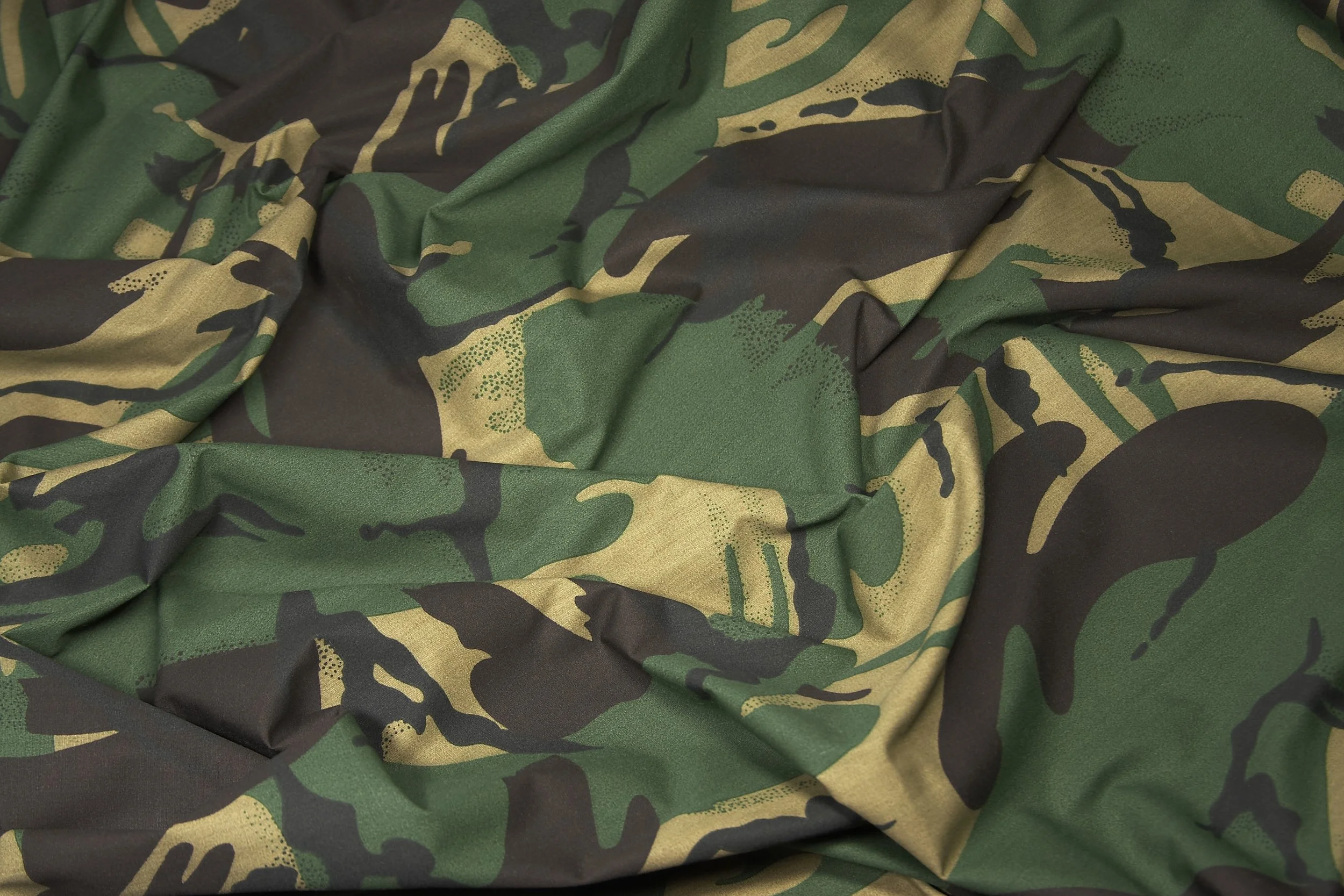
The History of British DPM Camouflage
From Service to Sustainable Fashion
How DPM became one of Britain's most iconic military camouflage patterns, and why it deserves a second life through circular design, upcycling and sustainable fashion.
Every piece of British DPM camouflage carries a story.
For decades, this distinctive pattern accompanied British Armed Forces personnel through training, deployments and service around the world. Developed to help British soldiers operate effectively in some of the world's most challenging environments, DPM became one of the most recognisable military camouflage patterns ever created.
What is British DPM Camouflage?
Disruptive Pattern Material (DPM) is the camouflage pattern that equipped the British Army for more than 40 years.
Developed during the 1960s and introduced on specialist garments before becoming standard issue from 1968, the now iconic DPM pattern replaced the plain olive-green uniforms previously worn by British soldiers. Its distinctive brushstroke design used contrasting shapes and colours to disrupt the wearer’s outline in woodland environments.
Rather than attempting to make soldiers invisible, DPM worked by confusing the eye. A combination of greens, browns, black and sand tones blended effectively with the temperate landscapes of Northern Europe, helping personnel remain less conspicuous in natural surroundings.
The pattern became one of the most recognised military camouflage systems in the world, influencing camouflage development across numerous armed forces and inspiring brushstroke designs far beyond the UK.
Today, DPM remains instantly recognisable – not only as a military innovation but as a symbol of British design and manufacturing excellence.
The Origins of Military Camouflage
The story of DPM is part of a much larger one about how military clothing evolved.
For centuries, armies wore brightly coloured uniforms that helped identify regiments and demonstrate national pride. However, as firearms became increasingly accurate during the late nineteenth century, standing out on the battlefield became a serious disadvantage.
The First World War transformed military thinking, accelerating the development of concealment techniques and specialist camouflage units. By the Second World War, disruptive patterns were appearing on vehicles, equipment and some specialist uniforms across Europe.
Building on these lessons, the British military continued refining camouflage design during the Cold War. This process ultimately led to the creation of DPM – a pattern that would become synonymous with generations of British soldiers.
The Evolution of British DPM
The development of DPM reflects decades of changing military requirements:
1940s – Early British brushstroke camouflage patterns are developed during the Second World War
1960s – Development of the first DPM pattern.
1968 – Woodland DPM enters widespread service with the British Army.
1990s – Desert DPM is introduced for operations in arid environments, including the Gulf War.
2010 – The British Army begins replacing DPM with Multi-Terrain Pattern (MTP), designed to perform effectively across a wider range of environments.
Although DPM has been replaced as the British Army's standard camouflage, authentic equipment and uniform remains highly sought after by collectors, outdoor enthusiasts and those who appreciate genuine British military surplus.
Why British DPM Became So Successful
DPM's longevity wasn't accidental.
Unlike camouflage developed for highly specific environments, DPM was designed to perform across varied woodland and temperate terrain. Influenced by Britain's earlier Denison camouflage design, its distinctive brushstroke shapes create contrast and visual disruption, helping break up the human silhouette among trees, hedgerows and mixed vegetation.
Over time, specialist variants were developed for tropical environments, desert warfare and other operational requirements. During operations in Afghanistan, some desert DPM uniforms were even over-dyed a distinctive teal green to improve effectiveness in greener regions, while many personnel adapted by combining woodland and desert garments to suit local conditions.
Its versatility helped cement DPM's reputation across decades of military service.
But the pattern itself tells only part of the story.
British military uniforms were manufactured to demanding specifications using durable cotton blends, reinforced stitching, ripstop fabrics, robust hardware and practical design features intended to withstand years of use in challenging conditions.
Those same qualities now make military surplus an exceptional resource for circular fashion.
As Tom M.W.D., Founder and Designer at British Material Unit (BMU), explains:
"Every garment possesses an inherent intelligence, and it is our responsibility to preserve, study and utilise it as effectively as possible. By treating surplus as a valuable resource for sampling, research, development and innovation, we can move towards a more circular approach to design.
“Feedback loops are essential at every stage of a garment's lifecycle, from procurement and use to disposal and eventual repurposing. Understanding a garment's provenance – from its creator to its wearer – enables its materials and knowledge to be appropriately reallocated, extending their value and giving new life to future garments."
Built to Last: The Sustainability Case for British Military Surplus
In an era where many garments are designed for short lifecycles, military clothing offers a powerful alternative.
Every British military uniform represents a significant investment in engineering, manufacturing and performance. These garments are expected to withstand rigorous training, repeated laundering and challenging operational environments – often for years.
Long after a uniform has completed its original purpose, much of the fabric remains exceptionally durable.
This is where circular fashion creates a unique opportunity.
Instead of allowing valuable textiles to become waste, clothing upcycling keeps high-quality materials in circulation for longer, reducing demand for newly manufactured fabrics while retaining the value already embedded within them.
At Operation Upcycle, we see this potential every day.
As Harriet Sanderson, Project Lead at Operation Upcycle, explains:
"Some uniforms arrive with repaired seams, faded elbows or original issue labels still intact. Those marks can't be replicated, and they're part of what makes every piece unique.”
What might appear to be wear and tear is often part of a garment's story – and a reminder that longevity is something worth celebrating.
Supporting the Armed Forces Community Through Circular Design
The value of surplus military textiles extends beyond sustainability. extends beyond sustainability.
Every panel of authentic DPM carries a connection to the people who wore it. For veterans and serving personnel, these garments often represent training, deployments, friendships and shared experiences that form part of military life.
By repurposing genuine military textiles rather than reproducing camouflage on new materials, upcycling helps preserve that authenticity.
Each finished piece becomes more than a product. It becomes a tangible connection to British military heritage – reimagined for a new generation while honouring the communities behind it.
This approach demonstrates that sustainability and social impact can work hand in hand: reducing waste, supporting veteran-focused initiatives and ensuring valuable materials continue serving a purpose.
Carrying the Story Forward
At Operation Upcycle, we believe military surplus deserves to be seen differently.
These aren't simply discarded uniforms. They are expertly engineered textiles with decades of history woven into every fibre. They were designed to perform in some of the world's toughest environments and still have value long after their military service ends.
By transforming authentic British military surplus into contemporary products, we extend the life of exceptional materials, reduce textile waste and preserve the stories, craftsmanship and heritage that make each piece unique.
Because truly sustainable design isn't always about creating something new.
Sometimes it's about recognising the value of what's already here – and giving it the opportunity to serve again.
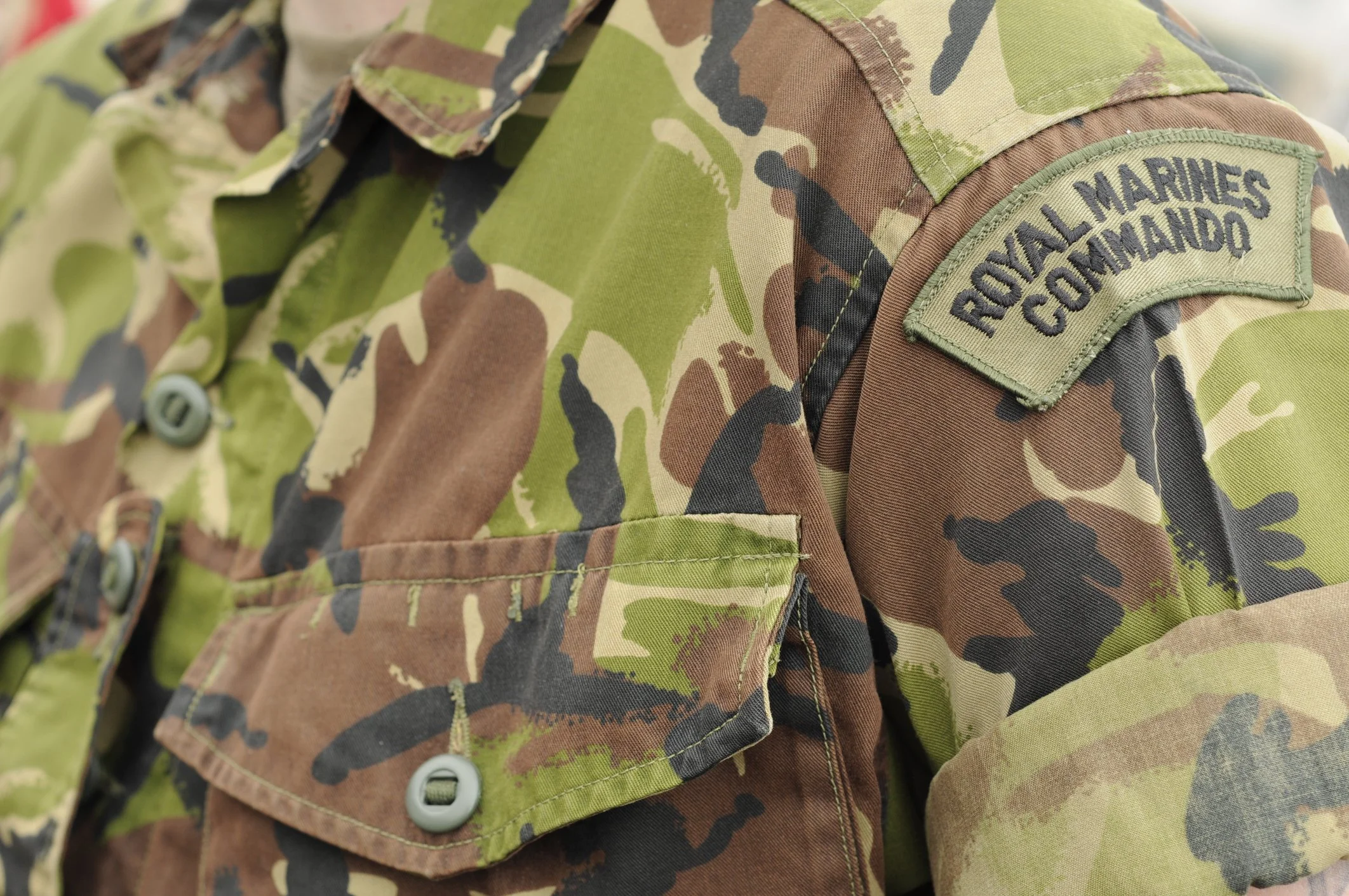
The classic Woodland DPM, in use by the Royal Marines commando
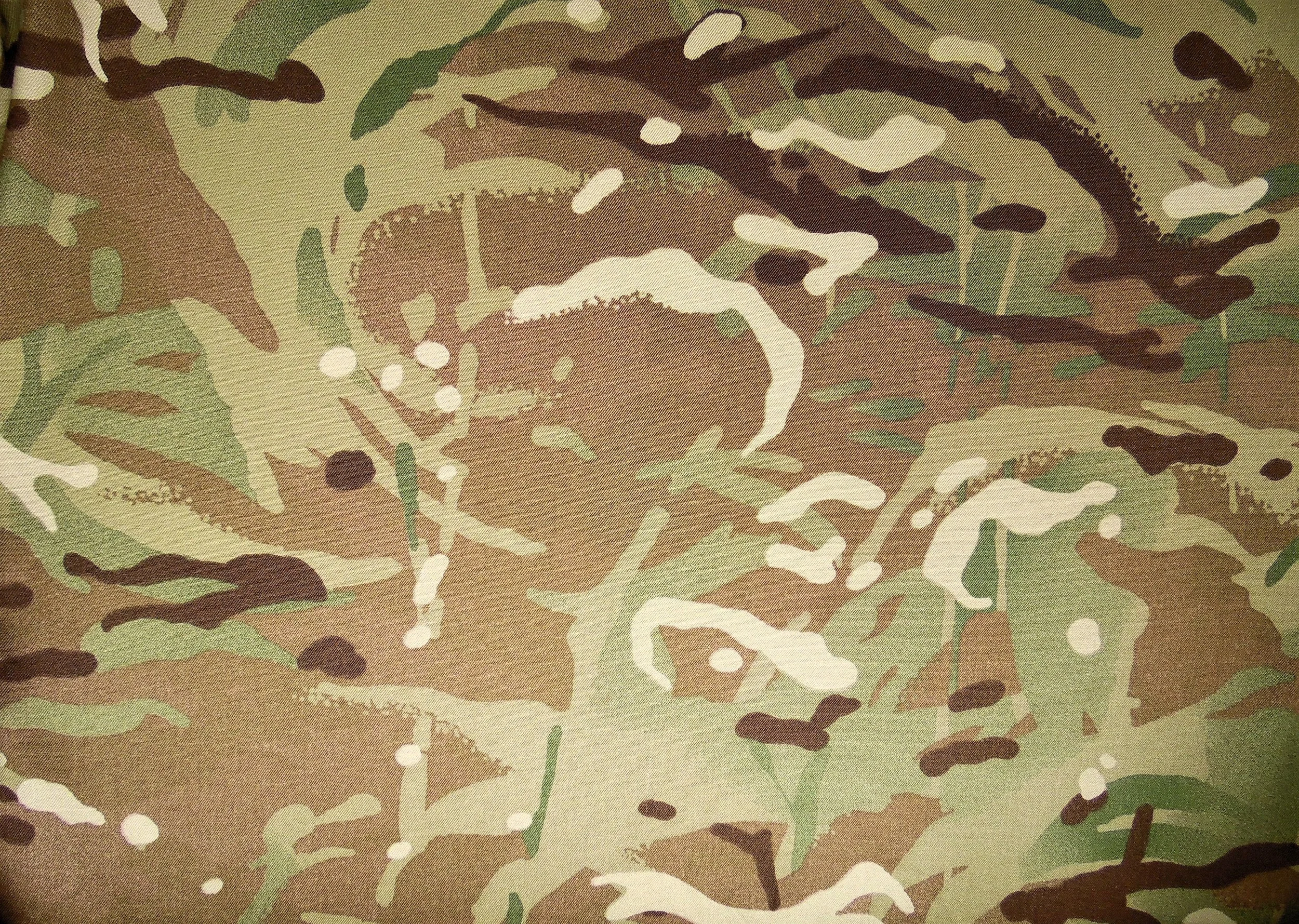
MTP camouflage - currently in use by the British Armed Forces
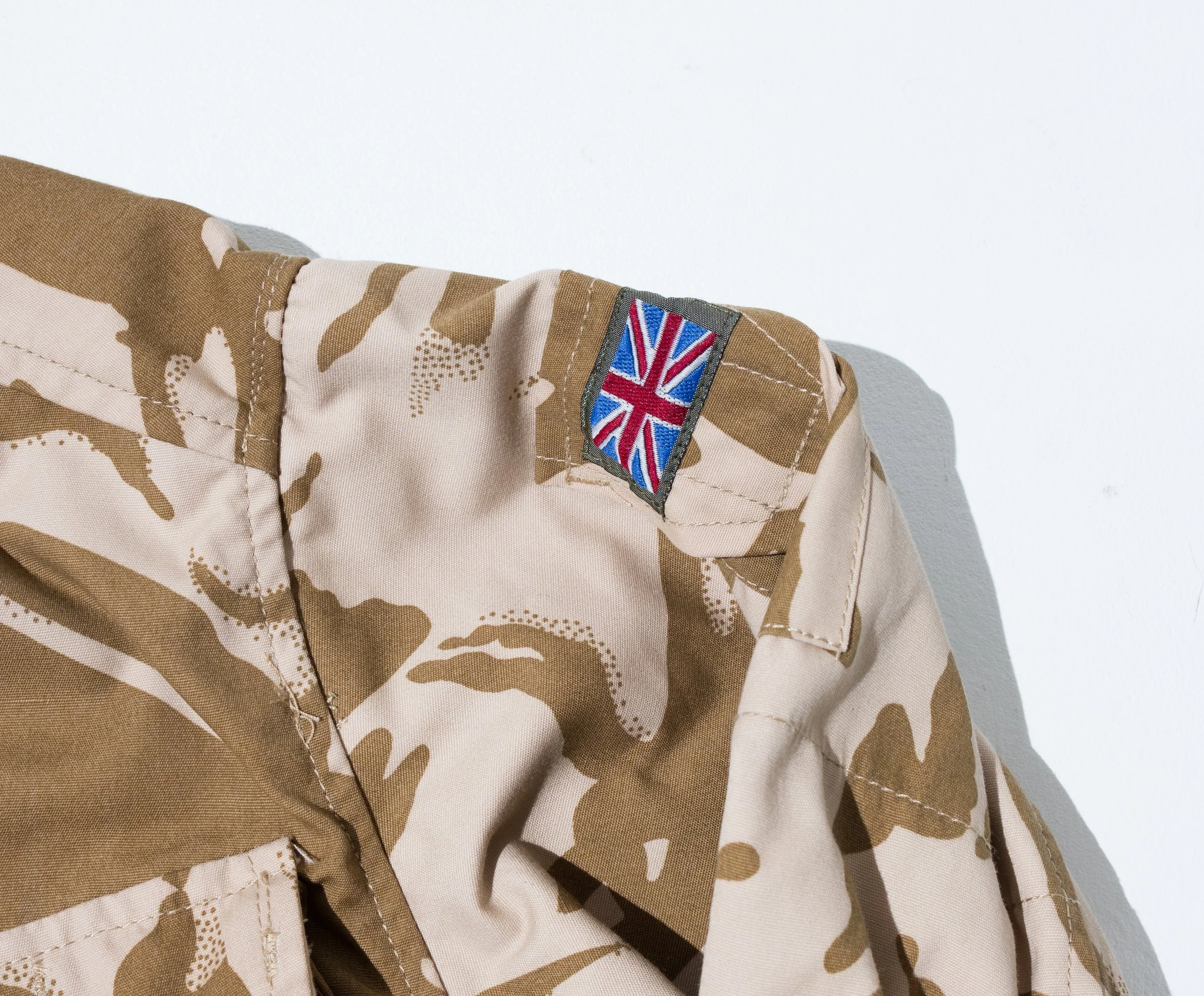
A British Army DPM Desert Camo Combat Smock
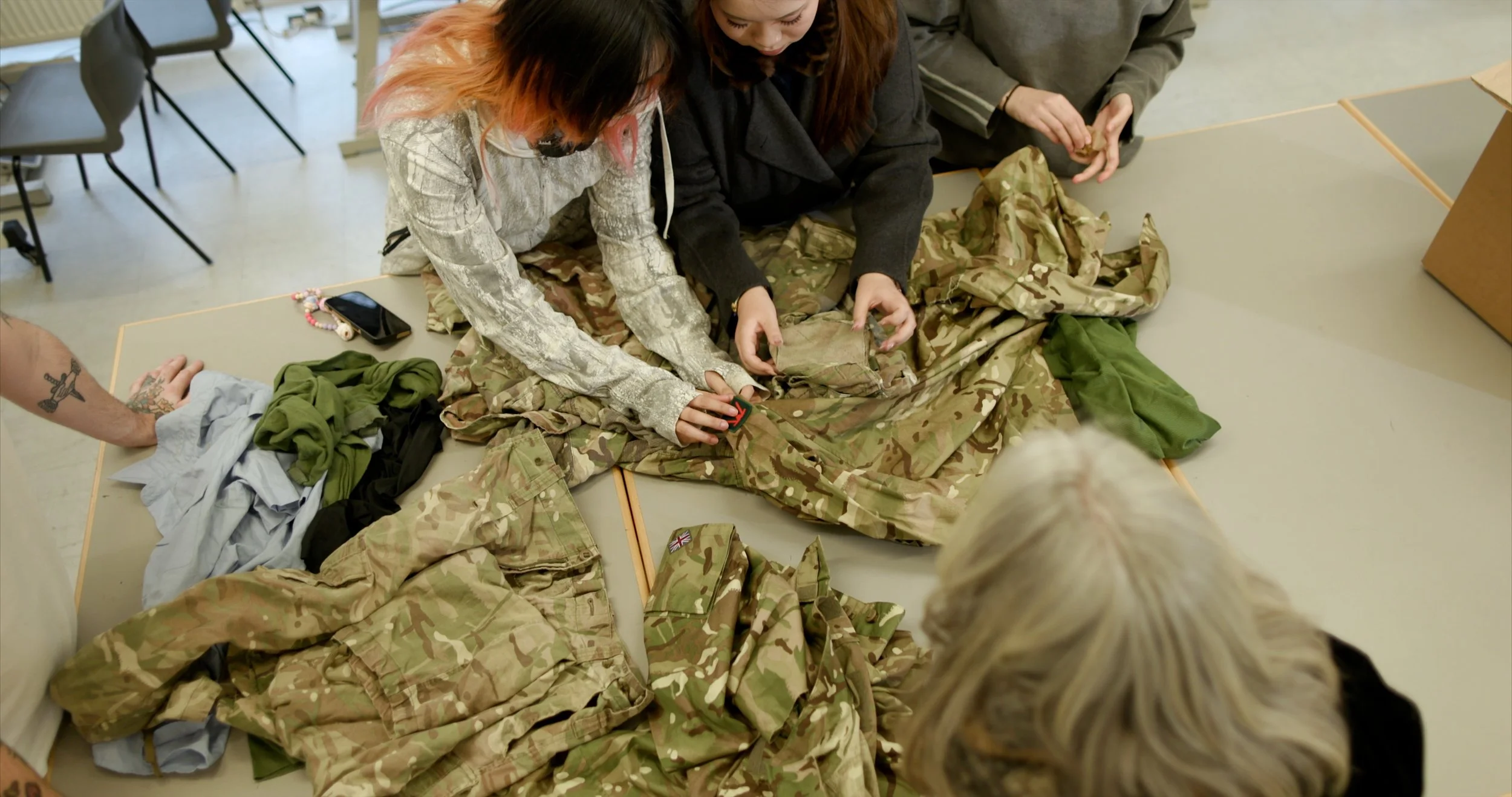
Students from the Winchester School of Art inspecting MTP camouflage garments to be upcycled
About Operation Upcycle
Operation Upcycle is a national initiative transforming surplus military textiles into sustainable, contemporary fashion with purpose. Bringing together Ramco, UK fashion students, His Majesty's Prison and Probation Service, and veterans' charities, the initiative is creating a circular fashion model that benefits people, the planet and the Armed Forces community.
Every item is handcrafted from genuine military uniforms, preserving British military heritage while reducing textile waste and demonstrating how sustainability, social impact and thoughtful design can work together
About British Material Unit
British Material Unit (BMU) is a designer-led startup reutilising surplus textile waste, uniting the intelligence of garments and wearers via circular design tools, repositories and systems.
BMU is a partner on Ramco’s Operation Upcycle initiative focusing on the research and development of design systems and technologies to effectively remanufacture and extend the lifecycle of surplus military textiles whilst championing British manufacturing.
How DPM became one of Britain's most iconic military camouflage patterns, and why it deserves a second life through circular design, upcycling and sustainable fashion.
Every piece of British DPM camouflage carries a story.
For decades, this distinctive pattern accompanied British Armed Forces personnel through training, deployments and service around the world. Developed to help British soldiers operate effectively in some of the world's most challenging environments, DPM became one of the most recognisable military camouflage patterns ever created.
What is British DPM Camouflage?
Disruptive Pattern Material (DPM) is the camouflage pattern that equipped the British Army for more than 40 years.
Developed during the 1960s and introduced on specialist garments before becoming standard issue from 1968, the now iconic DPM pattern replaced the plain olive-green uniforms previously worn by British soldiers. It’s distinctive brushstroke design used contrasting shapes and colours to disrupt the wearer’s outline in woodland environments.
Rather than attempting to make soldiers invisible, DPM worked by confusing the eye. A combination of greens, browns, black and sand tones blended effectively with the temperate landscapes of Northern Europe, helping personnel remain less conspicuous in natural surroundings.
The pattern became one of the most recognised military camouflage systems in the world, influencing camouflage development across numerous armed forces and inspiring brushstroke designs far beyond the UK.
Today, DPM remains instantly recognisable – not only as a military innovation but as a symbol of British design and manufacturing excellence.
The Origins of Military Camouflage
The story of DPM is part of a much larger one about how military clothing evolved.
For centuries, armies wore brightly coloured uniforms that helped identify regiments and demonstrate national pride. However, as firearms became increasingly accurate during the late nineteenth century, standing out on the battlefield became a serious disadvantage.
The First World War transformed military thinking, accelerating the development of concealment techniques and specialist camouflage units. By the Second World War, disruptive patterns were appearing on vehicles, equipment and some specialist uniforms across Europe.
Building on these lessons, the British military continued refining camouflage design during the Cold War. This process ultimately led to the creation of DPM – a pattern that would become synonymous with generations of British soldiers.
The Evolution of British DPM
The development of DPM reflects decades of changing military requirements:
1940s – Early British brushstroke camouflage patterns are developed during the Second World War
1960s – Development of the first DPM pattern.
1968 – Woodland DPM enters widespread service with the British Army.
1990s – Desert DPM is introduced for operations in arid environments, including the Gulf War.
2010 – The British Army begins replacing DPM with Multi-Terrain Pattern (MTP), designed to perform effectively across a wider range of environments.
Although DPM has been replaced as the British Army's standard camouflage, authentic equipment and uniform remains highly sought after by collectors, outdoor enthusiasts and those who appreciate genuine British military surplus.
Why British DPM Became So Successful
DPM's longevity wasn't accidental.
Unlike camouflage developed for highly specific environments, DPM was designed to perform across varied woodland and temperate terrain. Influenced by Britain's earlier Denison camouflage design, its distinctive brushstroke shapes create contrast and visual disruption, helping break up the human silhouette among trees, hedgerows and mixed vegetation.
Over time, specialist variants were developed for tropical environments, desert warfare and other operational requirements. During operations in Afghanistan, some desert DPM uniforms were even over-dyed a distinctive teal green to improve effectiveness in greener regions, while many personnel adapted by combining woodland and desert garments to suit local conditions.
Its versatility helped cement DPM's reputation across decades of military service.
But the pattern itself tells only part of the story.
British military uniforms were manufactured to demanding specifications using durable cotton blends, reinforced stitching, ripstop fabrics, robust hardware and practical design features intended to withstand years of use in challenging conditions.
Those same qualities now make military surplus an exceptional resource for circular fashion.
As Tom M.W.D., Founder and Designer at British Material Unit (BMU), explains:
"Every garment possesses an inherent intelligence, and it is our responsibility to preserve, study and utilise it as effectively as possible. By treating surplus as a valuable resource for sampling, research, development and innovation, we can move towards a more circular approach to design.
Feedback loops are essential at every stage of a garment's lifecycle, from procurement and use to disposal and eventual repurposing. Understanding a garment's provenance – from its creator to its wearer – enables its materials and knowledge to be appropriately reallocated, extending their value and giving new life to future garments."
Built to Last: The Sustainability Case for British Military Surplus
In an era where many garments are designed for short lifecycles, military clothing offers a powerful alternative.
Every British military uniform represents a significant investment in engineering, manufacturing and performance. These garments are expected to withstand rigorous training, repeated laundering and challenging operational environments – often for years.
Long after a uniform has completed its original purpose, much of the fabric remains exceptionally durable.
This is where circular fashion creates a unique opportunity.
Instead of allowing valuable textiles to become waste, upcycling keeps high-quality materials in circulation for longer, reducing demand for newly manufactured fabrics while retaining the value already embedded within them.
At Operation Upcycle, we see this potential every day.
As Harriet Sanderson, Project Lead at Operation Upcycle, explains:
"Some uniforms arrive with repaired seams, faded elbows or original issue labels still intact. Those marks can't be replicated, and they're part of what makes every piece unique.”
What might appear to be wear and tear is often part of a garment's story – and a reminder that longevity is something worth celebrating.
Supporting the Armed Forces Community Through Circular Design
The value of military surplus extends beyond sustainability.
Every panel of authentic DPM carries a connection to the people who wore it. For veterans and serving personnel, these garments often represent training, deployments, friendships and shared experiences that form part of military life.
By repurposing genuine military textiles rather than reproducing camouflage on new materials, upcycling helps preserve that authenticity.
Each finished piece becomes more than a product. It becomes a tangible connection to British military heritage – reimagined for a new generation while honouring the communities behind it.
This approach demonstrates that sustainability and social impact can work hand in hand: reducing waste, supporting veteran-focused initiatives and ensuring valuable materials continue serving a purpose.
Carrying the Story Forward
At Operation Upcycle, we believe military surplus deserves to be seen differently.
These aren't simply discarded uniforms. They are expertly engineered textiles with decades of history woven into every fibre. They were designed to perform in some of the world's toughest environments and still have value long after their military service ends.
By transforming authentic British military surplus into contemporary products, we extend the life of exceptional materials, reduce textile waste and preserve the stories, craftsmanship and heritage that make each piece unique.
Because truly sustainable design isn't always about creating something new.
Sometimes it's about recognising the value of what's already here – and giving it the opportunity to serve again.
The classic Woodland DPM, in use by the Royal Marines commando
MTP camouflage - the standard pattern currently in use by the British Armed Forces
A British Army DPM Desert Camo Combat Smock
Students from the Winchester School of Art inspecting MTP camouflage garments to be upcycled
About Operation Upcycle
Operation Upcycle is a national initiative transforming surplus military textiles into sustainable, contemporary fashion with purpose. Bringing together Ramco, UK fashion students, His Majesty's Prison and Probation Service, and veterans' charities, the initiative is creating a circular fashion model that benefits people, the planet and the Armed Forces community.
Every item is handcrafted from genuine military uniforms, preserving British military heritage while reducing textile waste and demonstrating how sustainability, social impact and thoughtful design can work together
About British Material Unit
British Material Unit (BMU) is a designer-led startup reutilising surplus textile waste, uniting the intelligence of garments and wearers via circular design tools, repositories and systems.
BMU is a partner on Ramco’s Operation Upcycle initiative focusing on the research and development of design systems and technologies to effectively remanufacture and extend the lifecycle of surplus military textiles whilst championing British manufacturing.